When Abuse Doesn’t End: Understanding Coercive Control and Post-Separation Abuse
By Zee Justice Project
Abuse is often misunderstood.
Many people believe abuse must be physical to be real—visible bruises, documented injuries, something tangible. But one of the most dangerous and least understood forms of abuse leaves no visible marks.
It is called coercive control.
And for many survivors, it doesn’t end when the relationship ends.
What Is Coercive Control?
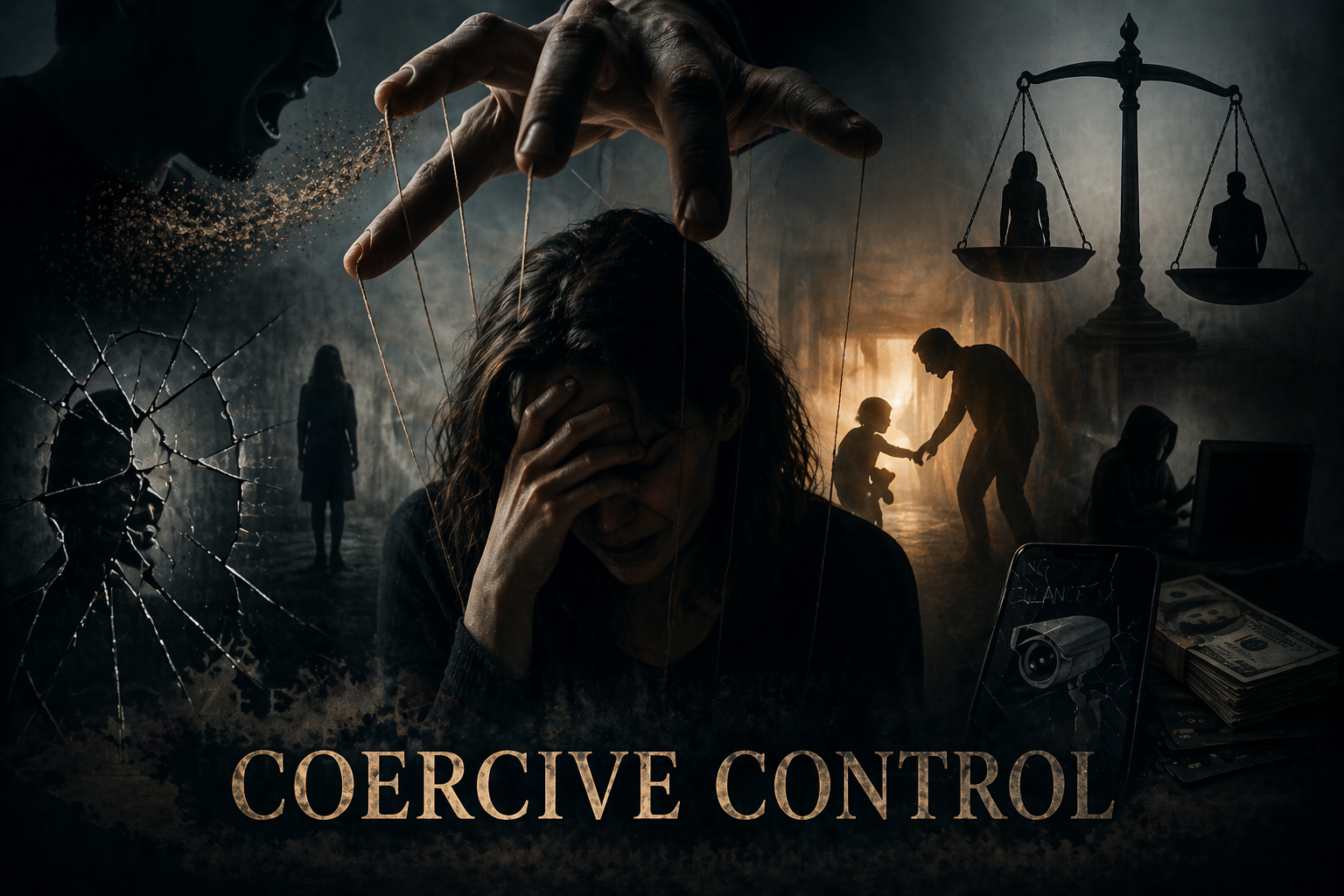
Coercive control is a pattern of behavior designed to dominate, isolate, and destabilize another person. It is not a single incident—it is a sustained strategy of power.
This form of abuse can include:
Emotional degradation and humiliation
Gaslighting and reality distortion
Financial control or exploitation
Isolation from family and support systems
Surveillance, stalking, or intimidation
Manipulation of children and parenting relationships
Unlike physical violence, coercive control often operates quietly. It erodes confidence, autonomy, and identity over time.
When Leaving Makes It Worse
One of the most dangerous myths about abuse is this:
“Why didn’t they just leave?”
In reality, leaving is often when the abuse escalates.
When control is threatened, the tactics change.
Survivors frequently report:
Increased harassment and stalking
Smear campaigns targeting friends, family, and community
False narratives designed to discredit the survivor
Escalation into legal and financial control
This phase is known as post-separation abuse, and it is widely documented in abuse research—but still poorly recognized in legal systems.
When the System Becomes the Weapon
Family courts are intended to protect children and ensure fairness.
But in cases involving coercive control, they can be misused.
This is sometimes referred to as litigation abuse or legal system abuse.
Common patterns include:
Filing excessive or retaliatory legal motions
Reframing abuse as “mutual conflict”
Presenting the abuser as calm and reasonable
Portraying the survivor as unstable or emotional
Using custody proceedings as a form of punishment
In these situations, the courtroom becomes an extension of control.
And the survivor is forced to defend not only their safety—but their credibility.
A Pattern, Not Isolated Incidents
What makes coercive control difficult to identify is that each behavior, taken alone, can seem explainable or even trivial.
But together, they form a pattern.
A survivor may experience:
Being blamed for the abuser’s infidelity
Persistent insults targeting appearance, age, or worth
Financial manipulation or control
Isolation from loved ones through misinformation
Children being used as leverage or turned against them
Ongoing stalking, monitoring, or digital intrusion
Continued harassment through the legal system after separation
This is not conflict.
This is systematic domination across emotional, social, financial, and legal domains.
Why This Matters for Justice Reform
Coercive control challenges how systems define and respond to abuse.
When courts focus only on isolated incidents rather than patterns:
Survivors may not be believed
Abusers may appear credible
Children may be placed in harmful dynamics
Legal outcomes may reinforce, rather than interrupt, the abuse
This is why judicial reform must include:
Recognition of coercive control as a pattern
Training for judges and legal professionals
Improved standards for evaluating credibility and evidence
Greater awareness of post-separation abuse tactics
As outlined in Zee Justice Project’s research and strategy framework, addressing systemic abuse requires not only individual advocacy—but structural change in how courts operate and evaluate harm .
Moving Forward: Naming the Pattern
For survivors, one of the most powerful steps is understanding:
What you experienced has a name.
It is not confusion.
It is not mutual dysfunction.
It is not your fault.
It is a recognized and documented form of abuse.
And when it is clearly named, documented, and understood, it becomes harder to ignore.
About Zee Justice Project
Zee Justice Project is a Texas-based nonprofit focused on:
Judicial transparency and accountability
Public education about legal rights
Documentation of systemic abuse
Support and resources for survivors navigating the legal system
Our mission is to ensure that patterns like coercive control and legal system abuse are no longer overlooked—but recognized, addressed, and reformed.
If You Are Experiencing This
You are not alone.
Consider:
Documenting patterns, not just incidents
Seeking support from qualified professionals
Consulting a licensed attorney for case-specific guidance
Zee Justice Project will continue working to ensure that survivors are heard—and that systems evolve to reflect the realities they face.
This article is for educational purposes and does not constitute legal advice.